Tuesday, April 8, 2008

2008 Giro d'Italia Marketing and Fashion

The marketing campaign for the 2008 Giro d'Italia has begun in earnest. The leading piece in the campaign is this "The Giro returns, Italian passion" which appeared in yesterday's La Gazzetta dello Sport.
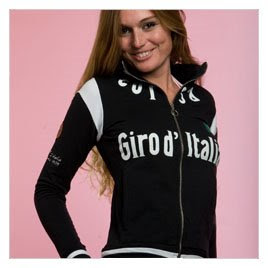
In addition to the jerseys typically on sale the Giro has once again created a "fashion" line of sports clothing. Here are some examples:


The entire line can be seen at http://www.tifoshop.com/fashionboutique.asp


I suggest trying info@tifoshop.com to inquire about ordering.

Sunday, April 6, 2008

Peri-Fosse, and more

As previously mentioned, Floridian Brent was spending a week in Verona to get some riding in. Five days of some long rides, mixed with some relatively short ones plus a visit to Dario Pegoretti, culminated with a plan to tackle the Peri to Fosse climb on Thursday.


The Peri-Fosse climb is one of the "must do" climbs for all Verona area riders. 10% average for 10KM, with a couple of 15% sections.


From Verona the best way to arrive at Peri is to wind along the Val Adige until you reach Peri. The weather along the way was lovely but Fosse had ominous cloud cover moving in.


We arrived at Peri and Brent described the mountain as having been slashed by Zorro. There are only 10 switchbacks so the stretches are fairly long between the switchbacks making is look like Zs. As we climbed we were fortunate that it was still sunny on the climbing side of the mountain. In this photo you can see one of the switchbacks at the bottom, and across the valley the mighty Monte Baldo (which also has some great roads for climbing). On the valley floor you can see the town of Peri, and the Adige River. The 14th stage of this year's Giro di'Italia will descend from Fosse to Peri which I'm sure will be hair-raising.


Brent beat me to the top but I made him turn around and go down a bit so I could take some photographs. I'm sure he was happy to do the 15% section again!


We had a good panino at a coffee bar in Fosse and then continued on. After a small climb we came upon this spectacular view with Lake Garda in the distance. At this point of the ride it it was cold and windy. It's always a good idea to have available a jacket, and/or a good windbreaker, when riding in the higher elevations.


From this point it was very long and very fast descent into Fumane. Before dropping down into Fumane we were treated to this view looking towards the Po Valley.

Fumane welcomed us with sunshine.


From here we motored back to Verona. We were tired from all the KMs of the week and just wanted to get back as quickly as possible. It's the crazy things that do you that you best remember, right?

Thursday, April 3, 2008

A Visit to Dario Pegoretti


Brent dropped in for a visit again so we planned to ride to Dario Pegoretti's (Dario was also winner of the "Framebuilder of the Year" award) workshop in Caldonazzo on Tuesday. However, we did a lot of riding over the weekend (220 km +) so we decided to take the train from Verona to Caldonazzo instead as it's a 200km bike ride with some climbing thrown in. Caldonazzo is very easy to reach by train via Trento or Bassano del Grappa. This would also enable us to spend more time with Dario.


The Trento to Caldonazzo train was ultra-modern with clever bike racks; it obvious that being an autonomous region has its fiscal advantages.


The village of Caldonazzo is located on the shores of Lake Caldonazzo in the autonomous region of Trentino-Alto Adige. It's a beautiful setting as can be seen from this aerial photograph showing the village on the upper left.


Each of us had visited Dario in the past so we were both looking forward to seeing him again. It's a 3 minute walk from the train station


This is the first view you see of Dario's workshop


There are no large signs, only these small logos in glass panes; if you are not a Pegoretti fan you probably wouldn't know what's going on inside


"Jack" looks after security and approves of our visit


Brent is ready to enter Dario's world


Dario is always welcoming


Walking around inside you get a sense of this is where they really build Italian bikes, "fatto a mano" (handmade)


One of the cool things about Dario is that he's really into bikes. In fact, there are all kinds of bikes all over the place. Some examples of the older ones that he's made (like the CCKMP), and others that are collectibles. I wonder what that orange bike is (above?)


It's a very old MASI, a "Speciale" model when they still used the Italian for Special (which came later). 1960s?


This Marcelo and BLE-Big Leg Emma (look at those chainstays!) were finished,


And were destined to be packed


We chatted with Dario, in Italian and English, for quite awhile. A nice lunch gave us the opportunity to solve all the problems of Italy (just kidding) and talk about bike building, and the long history of builders from Verona. Brent was able to discuss some ideas he had with Dario about a future order to be placed with GITA.


The workshop is very busy, orders are up. There have been some delays in getting all the Columbus tubesets Dario would like. The main thing is that Dario is looking and doing well, and he continues coming to Verona for monthly checks with his doctors.


Someday I'll be asking myself why I haven't purchased a Pegoretti while I'm here. The answer, in part, is because the dollar is at 1.58 to 1 Euro at the moment and I'm retired. As they say here, "Boh."


It's always a pleasure meeting with Dario but then the time comes when it's time to go,


The train to Trento offered these last views of Lake Caldonazzo, and of Trento.


If you are ever in the Veneto, Trentino or Alto Adige you should plan to visit Pegoretti. It's a "must see". Email or call in advance.


Grazie mille Dario!
note: lower Masi photo by Martin Appel


Sunday, March 30, 2008

Mario Confente, Part III


Sometimes it's a small world. Since-he-read-my-blog, new found Italian cycling friend from Verona, Alessandro, was curious as well about the Mario Confente story. He in turn spoke to one of his cycling friends, Francesco, and incredibly, Francesco, knew Confente. Not only that, Francesco's wife, Ilia, grew up next door to Mario and his sisters in Montorio. Through Francesco and Ilia arrangements were made to meet Gianna Confente on Thursday, March 27, 2008. The four of us went to Gianna's home where we were very warmly received.


I brought along most of the Confente materials that are available on the web, and photographs from the CR list (http://www.classicrendezvous.com/USA/Confente_Mario.htm). Gianna was very grateful, and was more than gracious in sharing the information she had about her brother. She had many old newspaper articles about Mario's racing career and frame building, and many, many photographs (some recently received). There was a tremendous amount of information in the albums, too much to digest in a relatively short time.


I explained carefully, and with the help of Alessandro speaking in Italian, the esteem in which Mario's work is held. I believe that Gianna, although having an understanding of it before, now has a much better appreciation of how highly Mario's work is regarded. Mario Confente's story is far less, very far less, known within Montorio and Verona (they are adjacent) than it is in the United States. In fact, neither Francesco or Ilia were aware, until this evening, of the details of Mario's work in California.


As you can imagine, there were times during the course of the evening, that Gianna was quite moved by the discussion. It wouldn't have been appropriate for me to act like an investigative reporter.


Over wine, followed by torta and coffee, the following is what I learned that would be of interest:


-the original family home and frame building workspace was demolished in the 1970s.


-the second, and larger workshop in Montorio was located at 19, via Olive. The apartment above the Confente workshop is still there but the workshop area has been converted in garages. Gianna owns Mario's workbench from this shop (her husband and son have used it through the years so things have been added, etc).


-Mario's cycling accident resulted in a hematoma, which later caused a more serious medical condition requiring surgery. At that point in his life all of his sister's were married and it was because of his accident, plus the need of greater income that his father suggested that he focus full time on frame building. Gianna said that despite this Mario did continue racing for awhile. Gianna also displayed a letter of invitation from the Italian Olympic Committee inviting Mario to tryouts for the national team.


-Gianna knew nothing of Mario having ever made crosses for the Vatican. However, he did do repair work for the local parish priest in the church in Montorio; if he ever made any crosses it would have been for the parish priest.


There were many interesting photographs and old newspaper clippings that we will try to have scanned in the future. In the mean time these photographs of the photographs will have to suffice:


-with Eddy Merckx (photograph at the start of the blog)


-riding the first bike he built according to Gianna, photograph is dated May '66

-race photo and wearing Bencini team jersey

-The "Custom Bikes by Confente" workplace

-Mario working at MASI


Late into the evening, Gianna brought this out; it was very moving. It was suggested she save it as a family heirloom. The photograph to her right is the last one she received from Mario.
Three hours passed very quickly. It was a beautiful evening that will be long remembered. Sincere thanks to Gianna Confente, Alessandro (standing), Francesco and Ilia for making it possible.

Friday, March 28, 2008

Mario Confente, Part II


If you missed the beginning of the story Part I is a must read; see http://italiancyclingjournal.blogspot.com/2008/02/mario-confente.html


Part II(from the "Custom Bicycles by Confente" brochure; this brochure was produced by Rexart Cyclery)

"Mario Confente has gained international recognition as the master frame builder with the Masi Bicycle Company in Italy and, more recently, in the United States. He is now designing and manufacturing custom bicycles under his own name.


A Division of Rexart Cyclery of Jersey City, N.J., the Confente bicycle operation is housed in a new, specially designed plant in Los Angeles. Made-to-order road and track bicycles are produced in the plant.


Confente is believed to have produced more professional bicycles than any frame builder in the United States. After serving an apprenticeship with Bianchi, a widely known bicycle company in Italy, he joined Masi. Here his skills matured to the point that he became known as the craftsman of champions. During a seven-year period when he was master frame builder for Masi he produced about 1,700 bicycles. Many of them were ridden by winners of national and international races including such events as the Tour de France. In 1972, Confente came to the United States with Faliero Masi to establish Masi-U.S.A., he supervised production of more than 2,000 bicycles.


As his fame as an expert frame builder grew among experienced racers in the U.S., he was frequently asked to design custom-order bicycles. Responding to that demand, Confente joined in an enterprise with Rexart in 1976. Within a few short months, nationally known U.S. racers such as Jerry Ash, Skip Cutting and Xavier Miranda began riding Confente machines.


Confente has developed a number of technological innovations for his new plant. Among the equipment he has designed for the plant are specially fit and case-hardened steel jigs to assemble and join both road and track frames. Used to hold the frame angles and tube lengths to exceptionally close tolerances, the jigs assure production exactly according to the designated geometry of each frame. This results in frames that can be said to have excellent geometry.


Simply stated, excellent geometry in a custom frame means not only that the frame is absolutely straight, that the tubes, stays, and fork achieve exactly the desired angles; but that such lengths and angles are those required for the specific rider for whom the bicycle is custom-designed.


After a frame configuration has been determined, the first step in manufacturing is to cut the tubing to the desired size. These tubes are then fit to specially designed investment cast lugs, bottom bracket and crown before being shaped to the desired angles.


Special attention is given to joining the tubes, stays, and lugs. Confente has developed a particularly precise method of brazing to insure that all components are joined with no pin holes or voids that could lead to possible failure under extremely demanding service.


The key to the Confente brazing technique is using a temperature that is just below the melting point of the steel in order to not damage, distort, or crystallize the tubing by subjecting its molecular structure to too much heat, thus weakening the metal.


A pure brass brazing technique is used rather than a brazing alloy since this procedure results in the strongest joints-another critically important characteristic of high quality frame building. A special flux, developed by Confente to insure proper wetting (brazing) of all joints, is used.


After the frame is assembled, sandblasted, and carefully inspected, it receives a pre-painting acid bath. This operation removes all impurities and oxides from the surface of the steel. In addition, the acid bath insures that all the flux remaining would eventually permit a corrosive action to take place.


The acid bath is followed by an oven drying procedure. Then two baked-on coats of primer are applied. This step is followed by two applications of primary color., both of which are are also thermal cured. The decals are then applied and, as a final step, the frame is given two coats coats of clear lacquer.


Confente uses a special acrylic paint because it provided a much harder surface than epoxy or urethane-based paints that do not stand up under demanding service conditions of racing without wearing, chipping, or corroding.


Just prior to the painting operation, the front and rear drop-outs and fork crown are sometimes plated with a tri-metal combination of copper, nickel, and chrome to prevent rusting. These parts are masked during painting operations.


Only the finest components are used for Confente bicycles-Fully Campagnolo equipped; Cinelli handlebars, stem and saddle; Clement silk tires; Regina freewheel and chain; and, of course, either Reynolds or Columbus tubing.


Confente frames are produced in all types of Columbus and Reynolds tubing. Because each bicycle is individually fabricated, it is possible to mix Columbus and Reynolds main tubes and stays according to customer preferences.


For customers who are unable to come to the Los Angeles plant, Confente has developed a special skeletal form of the human body. Its use insures that the frame size and all other design parameters conform exactly to the customer's height, leg length, arm extension, waist attitude in the down position, length from seat post to stem and all other critical variables involved in custom frame design."


Note: a fully equipped Confente cost $995 in 1976.


The next blog entry will be about my very interesting visit with Mario Confente's sister, Gianna Confente.