Showing posts with label Dolomites. Show all posts

Monday, May 11, 2015

Ride with Miguel Indurain June 22-26 in the Dolomites


As part of inGamba's partnership with Pinarello and Hotel La Perla, inGamba is offering an exclusive opportunity to ride with Miguel Indurain this summer June 22-26, surrounded by the splendor of the Dolomites.

The package Includes:

• Miguel Indurain (5-time Tour de France Winner) led daily ride
• Pinarello Dogma F8 bike with Shimano Di2 and Zipp wheels
• A professional mechanic to fine tune and wash your bike daily
• Team car support on rides with mechanic
• Professional cycling soigneur for post ride massages
• Daily prepared ride food including energy drinks, bars and gels
• Garmin 810 with pre-downloaded routes or files for your GPS
• Pocket size ride map with daily ride and elevation profile
• Recovery drink and light lunch upon return to Pinarello Dogma lounge
• A Giordana FR-C Cycling kit with jersey and bib shorts
• Daily wash & fold service for your riding kit

You can find out more about this unforgettable experience here.

La Perla in Corvara

Content for the Italian Cycling Journal is now based upon contributions from readers. Please contribute. Stories about rides, granfondos, touring, having a good time cycling in Italy, Italian cycling history, racing, etc. are always welcome. Contact me at veronaman@gmail.com.    


Tuesday, April 28, 2015

Legendary Climbs, Dolomites + Stelvio, Gavia, Mortirolo


I received a note from Cycle Italia that they have two slots open on their Legendary Climbs tour of July 5-July 16. Any readers of ICJ  who sign up and mention the blog will their choice of rental bike (subject to availability) at NO EXTRA CHARGE.

What's in store? Passo Furcia, Val Pusteria, Passo Tre Croci, Tre Cime di Lavaredo, Passo Giau, Colle Santa Lucia, Falzarego, Valparola, Passo Campolongo, Passo Fedaia (Marmolada), Sella, Gardena, Passo Pordoi, Passo Costalunga, Monte San Pietro, Mendola, Palade, Passo dello Stelvio, Passo Mortirolo, and Passo Gavia.


Details at http://www.cycleitalia.com/legendary-climbs-east-dolomites.htm

Content for the Italian Cycling Journal is now based upon contributions from readers. Please contribute. Stories about rides, granfondos, touring, having a good time cycling in Italy, Italian cycling history, racing, etc. are always welcome. Contact me at veronaman@gmail.com.    


Monday, June 10, 2013

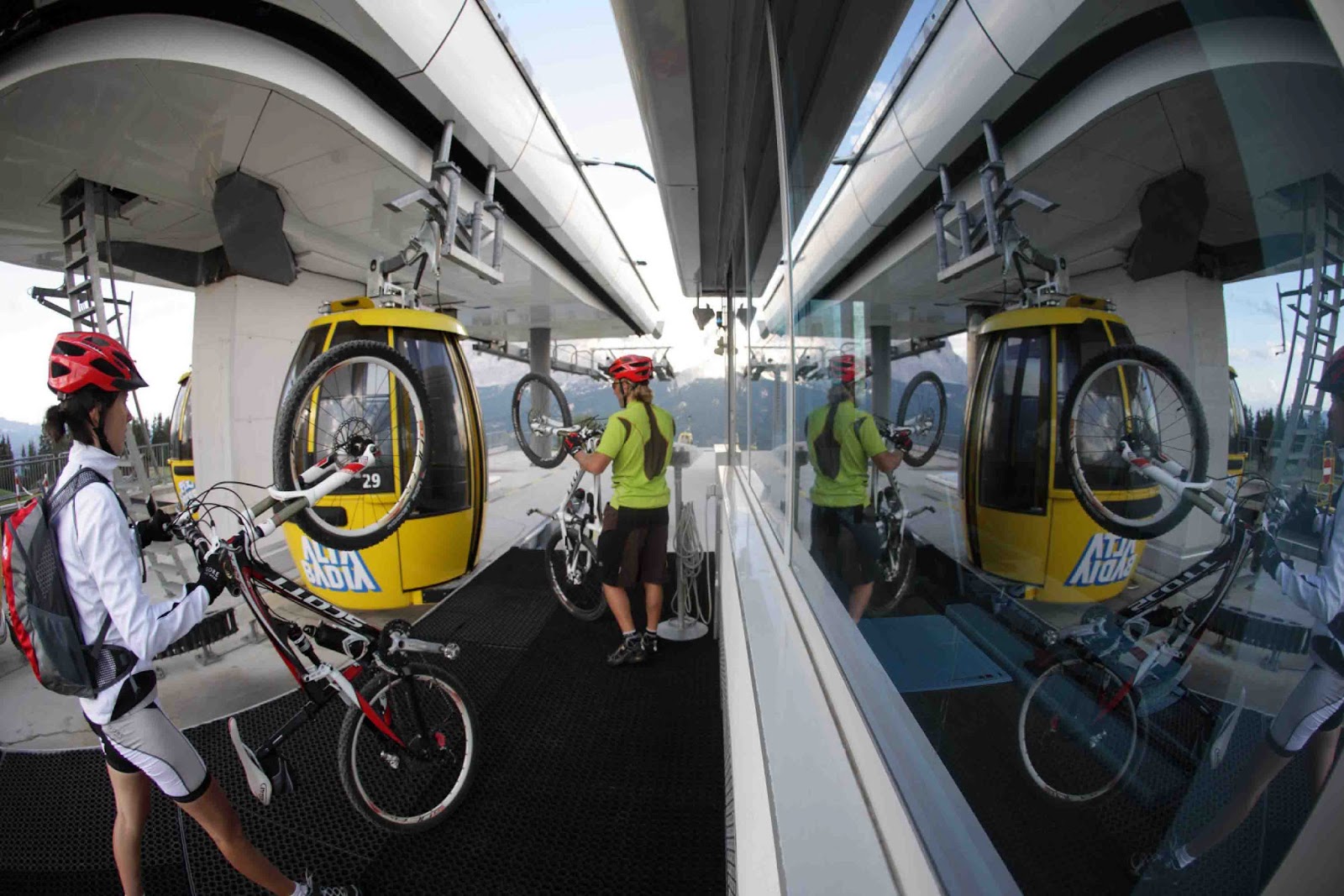
Sellaronda MTB Tour - Mountainbiking in the Dolomites


June 23rd sees the start of the mountain bike tourism season whereby you can get around the Sella Group with a little help from the lift systems. One way of doing this is the SELLARONDA MTB TOUR, a guided excursion which allows bikers who are reasonably fit and experienced in the discipline to cover most parts of the route of the HERO mtb race. The season comes to a close September 22nd. During the season you can take part in the tour, assisted by a mountain bike guide, which can be booked in any of the four valleys forming part of the itinerary: Val Gardena, Alata Badia, Arabbia, and Val di Fassa.

The tours:
-the clockwise tour: having undergone one or two alterations from past years, is 65 kilometers long and has a total altitude difference of 3,980 meters (550m which you have to ride)

-the anti-clockwise tour: is 55-56 km long and has a total altitude difference of 3,200 meters (1,200 meters which you have to ride).

The cost of the daily ticket for the TOUR is Euro 70,00 and this includes the services of the guide, your personal transport on the lift systems, and covers also the cost of your bike transport on lifts.

Summer 2013 introduces the SELLARONDA E-BIKE, ‘E’ being for Electric. So, it will be possible to do the Sellaronda MTB TOUR with a little bit of electrical assistance, still taking the lifts for the uphill climbs, while the downhills will be on forest or asphalt roads. An alternative way to enjoy the Dolomites for those who do not have great experience in mountain biking on open terrain. The e-bike version can be done clockwise, 71 km, or counter-clockwise, 58-62 km. Along the route there will be four points to recharge your e-bike.

Detauilked information, in 3D, can be found at www.sellarondatour.com

The Sellaronda MTB TOUR is project involving independent organisations in three provinces, Bolzano, Trento, and Belluno.

The contacts for the TOUR are:
in Val Gardena it is Dolomiti Adventures (www.dolomiti-adventures.com)
in Selva it is Selva Active (www.selva-active.com)
in Alta Badia it is Dolomite Biking (www.dolomitebiking.com)
Note also Arabba: Limit Bike Service (www.arabbabike.com) and Val di Fassa: Sport Check Point Canazei (www.fassasport.com)

Photos: COMetaPRess/Brena/CanonDigital

Follow on Twitter: ITALIANCYCJOURN or receive an email when new content is added using the "Follow by Email" button on the right side column. With more than 2,900 stories in this blog the custom search feature (right column) works best for finding subjects in the blog. There is also a translate button underneath the search button.

Stories for the Italian Cycling Journal about rides, granfondos, touring, having a good time cycling in Italy, Italian cycling history, racing, etc. are always welcome. Contact me at veronaman@gmail.com.


Monday, June 3, 2013

La Perla's "Pinarello Dogma" Lounge, Tours, and Bike Rentals


The La Perla hotel in Corvara, in the Dolomites, has partnered with Pinarello to create the Pinarello Dogma Lounge, a exhibition and meeting area at the hotel, and offer a variety of cycling services.

The hotel is also offering guided tours, cycling vacation packages, and Pinarello bike rentals. Available are Dogma 65.1 Think 2 and Dogma CX 29" Asymmetric bicycles. You can find the road and mtb tour offers here.

You will notice that some of the rides are lead by Maria Canins. A local hero, Canins, was the women's Tour de France winner of 1985, a silver and bronze medalist in the World Championships, and two time road Italian national champion.

All the details at La Perla.


Follow on Twitter: ITALIANCYCJOURN or receive an email when new content is added using the "Follow by Email" button on the right side column. With more than 2,900 stories in this blog the custom search feature (right column) works best for finding subjects in the blog. There is also a translate button underneath the search button.

Stories for the Italian Cycling Journal about rides, granfondos, touring, having a good time cycling in Italy, Italian cycling history, racing, etc. are always welcome. Contact me at veronaman@gmail.com.


Monday, April 15, 2013

MTBing in the Dolomites

Love the Dolomites? MTBing? Then you have to explore the DolomitiSuperSummer website to discover the great places to have summer fun.


Follow on Twitter: ITALIANCYCJOURN or receive an email when new content is added using the "Follow by Email" button on the right side column. 

Stories for the Italian Cycling Journal about rides, granfondos, touring, having a good time cycling in Italy, Italian cycling history, racing, etc. are always welcome. Contact me at veronaman@gmail.com.  There are now more than 2,700 stories in this blog. The search feature to the right works best for finding subjects in the blog. There is also a translate button at the bottom so you can translate each page.

Wednesday, October 10, 2012

Veneto: The Best of Italy - Cycling, Food and Wine

My thanks to Kathy Bechtel of Italiaoutdoors Food and Wine (www.italiaoutdoorsfoodandwine.com) for writing in with a story from one of her trips. Italiaoutdoors Food and Wine specializes in active vacations complemented by a focus on food, wine, culture and history.

Veneto: The Best of Italy - Cycling, Food and Wine

"Think of the northeast of Italy, and most tourists think of Venice - one of the most romantic cities in Europe, with its gondolas, villas, and Piazza San Marco, surrounded by the waters of the Adriatic. Not a spot usually considered for cycling, but the Lido di Venezia, just a short ferry ride away, is a great place to explore by bike.


Expert cyclists may think of the majestic Dolomites, the magnificent peaks north of Venice, home to some of the most challenging climbs in the world. But cyclists of all levels will find terrain to their liking here in the Veneto. From flatter rides along the Brenta canal, riding by Palladian villas built for the Venetian aristocracy, to the foothills where we can visit picturesque walled cities and a different wine zone each day, to the most famous climbs on the Giro d’Italia, there is something for every cyclist to enjoy. But don’t take our word for it - come check out the roads here on a beautiful Sunday afternoon, as we recently did - riding about 40km inland of Venice, with a view of the Alps to our north as we cycle from Castelfranco Veneto, to Asolo and onto Bassano del Grappa. Throughout the day we are joined by literally hundreds of local cyclists out for a wonderful afternoon of riding, enjoying the scenery, and a stop or two for a prosecco and a snack. Just our style!


We began the day in Castelfranco Veneto, originally a castle built in the 13th century. Portions of the medieval walls and towers still stand today. The famous painter Giorgione was born here, and the cathedral contains one of his most renowned works, called ‘La Pala’. There are several excellent restaurants to enjoy on a visit here, but my favorite is Antico Girone; not only due to its tasty local dishes and exceptional wine list, but they’ve also been kind enough to feed a couple of our hungry cyclists who were looking for some pasta during the hours of riposo, when most restaurants, including them, were closed! 


The day before, we enjoyed a great tour of the prosecco wine region, which you can do from a base in Castelfranco. There are numerous route options here, with hills for those who wish a vigorous ride, and flatter terrain for those who just want to tour and view the vineyards of the Prosecco and Piave wine regions. We ended with a wine tasting, enjoying just a few of the wines from the vineyards we explored earlier in the day. Well, to be honest, we enjoy a wine tasting every day...


Today we head first to Asolo. A hilltop town known as “The Pearl of Treviso” and also as “The City of a Hundred Horizons”, it is one of the most beautiful towns in Italy. The former Queen of Cyprus ruled here in the late 1400s, and later famous residents included the poet Robert Browning. It is a brief climb up to Asolo, but all take their time, and are well rewarded when they reach the top. Asolo is a town well-known to cyclists, I viewed the Giro d’Italia as it flew by on the narrow streets of this town in 2010. Here, we blend in with the locals. On this spectacular Sunday, we mingle with the crowds of native cyclists - bikes vastly outnumber cars here - as we stop for a quick snack at a local cafe.


Next, we are off to Bassano del Grappa. Originally the town was known as Bassano Veneto. The town is famous for the renowned Italian digestif, grappa, with two well-known producers located here - Poli and Nardini. It is commonly believed that the spirit was named after the town, but the town itself was not called Bassano del Grappa until 1928, long after the spirit was invented.

Bassano was located right on the front line in both World Wars. During the first World War, terrible battles ensued on neighboring Monte Grappa, where the Italian army regrouped after their devastating loss at Caporetto and made a heroic last stand against the Austrians. At the top of the mountain lie the remains of over 12,000 Italian troops and over 10,000 Austrian and Hungarian troops who lost their lives during this battle. In 1928, the name was changed to Bassano del Grappa, in memory of the soldiers killed. Hemingway fans may recall the role this town played in his novel A Farewell to Arms.

Cyclists who want a real challenge can take a detour and visit the summit of Monte Grappa, also a route known to fans of the Giro d’Italia. Here, there are numerous options for the ascent that we can guide you to, from one that reaches a 10% grade max to as much as 20%. Those who wish to stay on flatter terrain can take their time on a more circuitous route, and spend some time in Bassano visiting the beautiful Ponte degli Alpini - the lovely pontoon bridge designed by famed architect Palladio. All of our riders can meet up in Bassano to enjoy a wonderful lunch, followed by a tasting of the local grappas at Poli.


As the chef and wine lover of our guiding team, my passion is the foods and wines we see along the way. Wonderful seasonal produce grows all around Bassano del Grappa, from grapes for the local wines - we are in the Breganze and Vicenza DOC regions now - to olive oil, cherries, beets, and radicchio. On a recent culinary and biking trip in spring, we were lucky enough to visit Bassano during asparagus season. Bassano is home to one of the rarest delicacies in Italy, its white asparagus that appears between mid-March and mid-June. In the 1500 and 1600s, it was reserved for the banquets of the Venetian nobility. Today, it is still not exported outside of the region. We got a rare chance to cook with it during one of our afternoon cooking classes. So if you are in Bassano during the spring, make sure your post-ride pasta is fettucine with asparagus!

We can end our travels here in Bassano, with the afternoon to explore, or continue on to Marostica, or even Vicenza. This area supplies so many different ride options, we are never at a loss to find the perfect route or routes for a group! And with foods from the fish of the Adriatic to the mountain cuisine of the Dolomites, and over 30 different wine regions to explore, this is probably the most versatile and fascinating region in all of Italy."


You can watch a slide show of Italiaoutdoors Food and Wine photographs here:


Kathy also writes a blog, Italian Food, Wine and Travel, at www.chefbikeski.com


Stories for the Italian Cycling Journal about rides, granfondos, touring, having a good time cycling in Italy, Italian cycling history, racing, etc. are always welcome.

Follow on Twitter: ITALIANCYCJOURN

Contact me at veronaman@gmail.com. There are more than 2,600 stories in this blog. The search feature to the right works best for finding subjects in the blog. There is also a translate button at the bottom so you can translate each page.    

Thursday, September 8, 2011

MTBing in the "Dolomiti Stars"

The "Dolomiti Stars" includes the resort areas of Civetta, Falcade-Passo San Pellegrino, Arabba and Marmolada in the Dolomites. Here you can find spectacularly beautiful and challenging road bike rides, and also terrific mountain biking. Below are some suggested mtb routes courtesy of the nice people at www.dolomitistars.com .


CIVETTA
COL DEI BALDI
Medium difficulty route for a total 190,54 km and about 1913 m of altitude change. It starts off from Alleghe. Take the cable car lift to Piani di Pezzè, where you take a second lift up to the panoramic locality of Col dei Baldi (1915 m). Once off the chair lift we start going down towards the right for about 550 m. At the Col Fioret crossing we continue in the direction of Malga Boi Vescovà until we reach the crossroads for Casera Fontanafredda. Once passed the dairy there’s a slight, short uphill towards F.lla Pecol turnoff; when we come off the top it’s an intense downhill stretch for about 2 km with no less than a 15% negative gradient. At point Vizza Mareson we continue to the left under Bosco delle Foglie, another 500 metres of asphalt and we get to the parking lot for the lifts at Pescul. We use the lift to go back up to Fertazza. With a second stretch of chair lift we’re up at 2082 m on the panoramic Belvedere di Fertazza with its lodge. We proceed to the right to go up a few metres to Cima Fertazza then back down to path 566 towards Col di Davagnin. Immediately after the houses in Fernazza (1567 m) we continue along the path until we reach the hamlet of Coi, a little less than 600 m away, our first downhill section for about 3170 m with -654 m negative, so an average gradient of a little more than 20%. From Coi we set off for our final dive towards Alleghe Lake; it’s 3020 meters, with a downhill gradient of 15,5%, passing through the hamlets of Frena and Fontanive.


FALCADE
VALLE DI GARES
Valle di Gares has glacial origins and carves out a deep trench among the Pale di San Martino mountain chain. This stretch is an ample, rolling downhill that comes out in the wide plain of Pian delle Giare. From here you can see the Comelle Falls, a lovely, dramatic waterfall. Valle di Gares is accessible from Canale d’Agordo, birthplace of Pope Luciani, via a bicycle path that follows the main road and the Liera torrent. The 31,79 km-long route, with an altitude change of 1166 m, is of medium difficulty and goes all the way to the hamlet of Gares, where it starts to become much more challenging during a short yet intense climb to Malga Stia.


ARABBA
PASSO INCISA
This easy route, appropriate for everyone, starts from Arabba. We head east following asphalt downhill on SP n. 48 until we reach Renaz, where, in front of the family-run dairy (that’s worth a visit) there’s a turn to the left that goes uphill on asphalt until it comes to Malga Cherz. Here the path becomes steeper until it comes to Rifugio Incisa. We pass this and after a dozen or so metres we’re tempted to take the downhill that will take us to Corvara. Instead, we turn left and go up again, on a slight slope along a well- marked path. From here it’s mostly forests, where it’s an easy ride to Passo Campolongo. We take the asphalted provincial road for a few hundred metres and when we come to a conglomerate of hotels we take a left exit and find ourselves on a narrow single track, which soon becomes steep and heads straight up to Arabba. A softer alternative is to go down from Passo Campolongo to Arabba along the provincial road.


MARMOLADA
FORCA ROSSA
The magnificent Valle Pettorina is the starting point for this tour. You go up from the little village of Sottoguda, along the Serrai di Sottoguda gorge (about 2 km) until you reach Malga Ciapela. Continue in the direction of the campsite and the Miola holiday farm. Here you go up towards Malga Franzedaz and follow an old mule trail to the top of Forca Rossa. You can come back along the same route, or continue on towards Passo San Pellegrino and come back on the state road to Rocca Pietore/Sottoguda (challenging).

Click on photos to enlarge.

Follow on Twitter: ITALIANCYCJOURN

Stories for the Italian Cycling Journal about rides, granfondos, touring, having a good time cycling in Italy, Italian cycling history, etc. are always welcome. Contact me at veronaman@gmail.com. There are more than 2,100 stories in this blog. The search feature to the right works best for finding subjects in the blog. There is also a translate button at the bottom so you can translate each page.

Sunday, June 5, 2011

Maratona dles Dolomites Race Advice


Having just written about the Dolomites, and with the Maratona dles Dolomites coming up on July 10th, I thought it would be a good time to time for "Maratona dles Dolomites Race Advice" written by professional photographer and cyclist Dan Patitucci. You can see some of Dan's great photos at www.patitucciphoto.com

"In 2007 I did my first Maratona dles Dolomites. It was, without a doubt, one of the most rewarding days I have ever had in a competition. To stand on a Granfondo starting line with over 8000 other cyclists, at sunrise in one of the world’s most spectacular settings, with a massive day of riding ahead – and to feel the energy – is pure bliss.

Before the race I had been lucky enough to spend the six weeks leading up to the big day training in the very region – so, I was at a locals advantage of knowing the course inside and out. I had even ridden the course two times before race day. But still, I hadn’t raced it, I hadn’t pushed myself that hard yet, and I hadn’t done it with thousands of other cyclists around me.

A few friends had offered some advice, most of which I took, but one key piece I failed to act on cost me a top 100 finish. So, with this in mind, and with the Maratona fast approaching, I thought to share my thoughts on the event in the hopes that you will take something away of value. Keep in mind that after the race I had fallen so in love with the Dolomites and its rich cycling culture that I decided to call it home, I have been riding the same roads ever since 2007.

This advice is for those planning to push themselves as if it really were a race (and you’ll see, it is). For those looking to just survive, you get to simply enjoy the day, but you too must read on.

Stay in Front: This is basically impossible unless you have a starting number in the first 1000. But do your best to get by as many people as possible by the top of the second pass, the Pordoi. After the Pordoi it gets pretty tough although it does thin out. However, unless you have super climbing endurance, don’t blow up on the Sellaronda (the first loop and first 5 passes) as the Giau awaits – and it is the killer climb.

Careful on the Descents: Italians descend much closer together than Americans, it is pretty unnerving to have your leg hit someone’s handlebars at 75km/hr. Italians, being a vocal bunch, will be sure to let you know if you are screwing up. For the most part, people descend well in Europe, just relax and hold your line – practice the hairpin turns prior to racing, you’ll have the whole road on race day, use it.

The tricky sections in descent are:
Passo Pordoi: Long, fast straights into tight hairpins… just be ready for them.
Passo Sella: There is a right turn which will have flaggers standing as warning, who’s radius is longer and sharper than it looks. It is approached after a long and fast straight section after the initial turns off the Pass itself. This turn is so serious that there is an emergency medical team and helicopter on standby at the turn.
Passo Valparola: After the switchbacks on top, a long, straight section is descended at high speed. This is the approach to a tricky right turn that is sharper than it first appears, again, get to know it before race day. Though they are for motorcycles, there are grave markers in this turn for a reason.
Overall, the roads should be in great condition as many of them get re-surfaced prior to the Maratona.

Eating: This was where I made my mistake. While there are impressively stocked aid stations around the entire course, you won’t be checking in for a panino crudo if you are in race mode. But, you may want to consider it, either that or have your own pockets filled with what works for you.

After the Sellaronda there is the day’s only flattish/moderate section of road, and it is here where you must get some food down. It is the section after the descent of the Campolongo, from Arabba to Andraz and then again to the Colle Santa Lucia where there is a great aid station.

After Arabba, get some calories and salt in you for the evil Passo Giau, then let it digest enroute to the start of the climb after the Colle Santa Lucia.

Now… where I made my mistake. A good friend who does the Maratona every year warned me to be sure to eat something on top of the Giau or risk bonking on the last climb of the Falzarego.

Locally, I have heard the Giau referred to as Monkey Hill, for when you are climbing it you are sure that monkeys ran out from the forest and jumped on your back. But on race day, my friend warned me it is more like Cow Hill, you’ll feel as if you have a heifer on board. Fair enough, I would agree. It is a suffer fest.

In 2007, my data chip revealed I was in 90th position on top of the Giau, I did NOT eat, I bombed down in a small group I had cimbed with. I would pay the price, for on the last climb up to the Fazarego 44 people would pass me. There I sat, crawling up the pass with visions not of finish line glory, just pizza and pasta.

Water is found throughout and will be handed to you roadside.
Eat on top of the Giau, let it digest on descent. There is an aid station.

Gearing: I have embraced the Compact set up; 50/34 – 12/25. For me this is perfect. But I climb a lot in training and weigh 61kg (132lbs). Substituting a 12/27 could be nice.
Again, the Giau…. cows will be along for the ride.

Temperatures/Weather: Even if the day dawns clear and warm, you should be somewhat ready for anything. When riding in the Dolomites, I almost always carry a super light rain jacket in my jersey along with a thin headband – they can save the day and weigh next to nothing. Afternoon rain showers are pretty common.

Etiquette: Do your thing, but remember the Golden Rule (Do unto others as you would have them do unto you) as there are a lot of people around.

Do not throw your trash on the road – there will be trash cans after aid stations, use them. You are not a pro so don’t act like one, it is no big deal to put your wrappers back in your jersey. In 2009 the second place overall finisher was DSQ’d for tossing trash on live TV.

Things Not to Miss in the Dolomites

The week leading up to the race is a cyclists dream. There are daily group rides to both check out the course as well as to tick other passes not in the race. Much of the fun simply comes from being around so many nationalities; Italians, Dutch, Germans, Americans, Swiss… they are all in great abundance, making friends is easy.

To Do List

Passo delle Erbe (my personal favorite in all the Dolomites) loop: From Alta Badia; Climb the Passo Gardena, descend west to the autostrada, climb the Erbe, descend back to Val Badia via San Martino (100km, difficult)

Cortina d’Ampezzo and the Tre Croce Loop: Less than an hour (in a car) from Alta Badia is the famous posh village of Cortina. Sitting right amongst many of the Dolomite’s iconic peaks, it is well worth a day to explore. If you want to ride, check out the Tre Croce loop from Cortina that takes you through Misurina and the most famous of all Dolomite areas, the Tre Cime di Lavaredo. From there descend to Carbonin and then back to Cortina (about 50km, moderate).
Post ride, eat a Pizza Fantastica at Ristorante Ariston in Cortina – my vote for best pizza in all of Italy.

Walk up to the Rifugio Santa Croce above Pedraces (Badia): This is kind of a rest day activity, or something for the family – quite possibly the most peaceful, beautiful place in all the Dolomites. And good food… There is also the option of taking a lift nearly to the top from the village of Pedraces, or it is a one hour uphill (easy) walk through the beautiful forest.

People watching/bike gawking is as good as it gets. Grab a Gelato or Radler (beer and limonata) post pedal and soak in the fun sitting roadside in the village of Corvara. Better yet, do it daily in each village and decide which is best.

Note: in Alta Badia, the focal point of the race, all the famous villages where most racers stay (San Cassiano, La Villa, Corvara, Pedraces, San Leonardo) are just a few kilometers from one another, so getting around on a bike is actually about the most efficient. At some point in the week prior to the race, the area will be so thick with cyclists that being in a car is slower than walking or riding.

For more information about the area, and for guided events, visit our partners at Holimites.
For more information about the region, including hotels & guides, visit our own DolomiteSport Network."


Follow on Twitter: ITALIANCYCJOURN

Stories for the Italian Cycling Journal about rides, granfondos, touring, having a good time cycling in Italy, Italian cycling history, etc. are always welcome.
Contact me at veronaman@gmail.com. There are more than 1,900 stories in this blog. The search feature to the right works best for finding subjects in the blog. There is also a translate button at the bottom so you can translate each page.

Thursday, June 2, 2011

Riding in the "Dolomiti Stars"


The "Dolomiti Stars" includes the resort areas of Civetta, Falcade-Passo San Pellegrino, Arabba and Marmolada in the Dolomites. Here you can find spectacularly beautiful and challenging bike rides. Below are some suggested routes courtesy of the nice people at www.dolomitistars.com .


A RIDE AROUND THE CIVETTA

Alleghe - Cencenighe - Agordo - Passo Duran - Dont - Passo Staulanza - Selva di Cadore - Caprile - Alleghe
Every itinerary in the Dolomiti Stars is an unique spectacle. Don’t miss the ride around the majestic peaks of the Pelmo and Civetta across the sunny green fields of the Val Fiorentina and Val di Zoldo. It starts off from Alleghe, at the base of the Civetta. The first part is quite easy, with a downhill all the way to Cencenighe and down along the Cordevole valley to Agordo. After passing through the center of Agordo we turn left and face the first uphill challenge of the day, the Duran Pass (1605 m). Its very name offers a taste of the challenges it offers, yet the scenery is spectacular. Once on top we can see the Moiazza before diving into a fast, technical downhill that takes us to the village of e Dont. We turn left and start climbing again towards the Val di Zoldo aiming towards the Passo Staulanza (1773 m). While we’re riding we can admire the Civetta in its entire splendor to our left, while on the right we can see the Pelmo, also called “The Lord’s Throne” because of its distinctive chair shape. At the top of the Staulanza the hard part is over, and we ride down to Selva di Cadore, turn left and continue going down all the way to Caprile. From here we coast along the banks of the lake until we get back to Alleghe, where we can admire a front and centre view of the walls of the Civetta.
Distance: about 80 km
Difficulty: *** (1 to 5)


THE SELLARONDA

Arabba - Passo Campolongo - Passo Gardena - Passo Sella - Passo Pordoi - Arabba
Arabba’s geographical position makes it “the temple” in the Dolomites for cycling fans. Starting out from here, one of the musts is surely the Sellaronda tour, also known as the tour of the “Giro dei 4 Passi”. Arabba is the start and finish for this highly spectacular ride on the Dolomite passes (in order): Camplolongo (1875 m), Gardena (2121 m), Sella (2240 m) and Pordoi (2239 m) (you can ride it either clockwise or counter-clockwise). These four authentic Dolomite giants have a unique charm. Challenging climbs cover a total of 50 km with an altitude change of 1800 m. It’s even accessible to amateurs, if they’re physically fit and not in a hurry. The beauty of these mountains makes you forget the exertion of pedaling! Evidence of this is the Sellaronda Bike Day, a non-competitive event dedicated to sports and nature, open to everyone, scheduled here each year (for 2011 it’s a double date: on Sunday, July 3 and Sunday, September 18). Thousands of fans and entire families pedal along these spectacular passes, which are closed to traffic for the occasion.
Distance: about 50 km
Difficulty: *** (1 to 5)


PASSO SAN PELLEGRINO - FOLLOW THE ROADS OF THE CHAMPIONS

Falcade - Passo Valles - (Passo Rolle) - Paneveggio - Predazzo - Moena - Passo San Pellegrino - Falcade
We start out from Falcade and go up through Falcade Alto. On your left you can admire the Focobon chain, while behind you there’s a splendid view of the Falcade plain. Here you may even run into some champions pedaling…in fact, these roads are a training grounds for Ivan Basso, Vincenzo Nibali and the other champions from Team Liquigas-Cannondale during their high mountain retreat at Passo San Pellegrino. At the Passo Valles / Passo San Pellegrino cross road, we turn left and prepare to face the Passo Valles (2031 m) to then descend through famous fir woods known as “the violin forests” of Paneveggio’s National Park. At the crossroads you turn right and continue in the direction of Paneveggio Lake and then down through Bellamonte until you reach Predazzo. At the crossroads for Paneveggio riders in better shape can take a small detour by turning left and also taking on the Passo Rolle (1984 m). Once on top, after getting a good look at the famous Pale di San Martino, you go back down the same road and back to the route that leads to Predazzo. From here it’s an easy uphill in the valley until you reach Moena. At Moena you turn right and start the climb to Passo San Pellegrino (1919 m). Once on top you start back down with lovely views of the Monzoni chain and the Marmolada on your left, while on the right lies Col Margherita in its entire splendor and you ride back down to Falcade.
Distance: about 70 km
Difficulty: *** (1 to 5)


THE MARMOLADA – QUEEN OF THE DOLOMITES
Alleghe - Rocca Pietore - Sottoguda - Malga Ciaplea - Passo Fedaia - Canazei - Passo Pordoi - Arabba - Pieve di Livinallongo - Caprile - Alleghe
We set off from Alleghe to go conquer the “Queen of the Dolomites”, the Marmolada. We ride along the lake to Caprile and continue straight on; here the road begins to climb in the direction of Rocca Pietore. When we come to the village of Sottoguda we take the road that crosses the fascinating Serrai di Sottoguda, a canyon carved in the rock throughout millennia by the waters of the Pettorina torrent. We enjoy this natural scenery of rare beauty. We come out of the canyon in the Malga Ciapela quarter. Here there’s no more time for fun and games: we’re taking on a long, unending straight away with harrying gradients that will put even the best riders to the test. This will take us up to the final turns on the passo Fedaia (2057 m) where we can stop to catch our breath. Once on top we come to a false plain with lovely views of the pristine white Marmolada glacier to the left,as we ride along beside Fedaia Lake. Take care and be sure to recuperate your energy on the way down, because soon we’ll be pedaling up again, all the way to Canazei. Here we turn right and start climbing the passo Pordoi (2239 m), our “Cup-worthy peak” of the day, another legendary climb. Now we’ve overcome the last effort of the day and we can descend enjoying the Dolomite scenery all the way to Arabba. Here we continue downhill, first not very steeply, Pieve di Livinallongo and then down a steeper incline to Caprile to then make our way back to Alleghe.
Distance: about 60 km
Difficulty: **** (1 to 5)


IN THE TRACKS OF THE DOLOMITI CLASSIC-TMC-ARABBA
Arabba - Pieve di Livinallongo - Caprile - Selva di Cadore - Passo Giau - Pocol - Passo Falzarego - Arabba
This is the same short route featured in the gran fondo Dolomiti Classic-TMC-Arabba race, scheduled for Sunday, 11 September in Arabba. We start off from Arabba for the first easy kilometers towards Pieve di Livinallongo. The initial part is a simple downhill to Caprile. From here we start climbing to passo Giau (2236 m); at first the inclines aren’t too steep, until you reach Selva di Cadore; then it’s serious walls all the way to the summit. We come down in the direction of Cortina d’Ampezzo recuperating our strength as we admire the rare beauty surrounding us: the Averau and Nuvolau chains. At the intersection in Pocol we turn left and start up again; we’re about to face Passo Falzarego. On the left in the charming scenery we can admire the Five Towers (Cinque Torri), while the right has views over the Lagazuoi. Once we’ve overcome the climb we head down to the left towards Arabba. During the descent at passo Falzarego (2109 m) we simply must stop to take in the fascinating and mysterious Andraz Castle on our right, perched over the fir forests dominating the valley. At the end of the descent we turn right and trace the easy route back to Arabba.
Distance: about 80 km
Difficulty: **** (1 to 5)

Some of the cycling events that will take place this summer, to name a few: the Re Giau XII Trofeo della Montagna Stella Alpina (25 and 26 June), the Oderzo-Falcade-Oderzo (25 and 26 June), the Arabba-Passo Pordoi time trial climb (26 June), the Craft Bike Trans Alp (20 and 21 July), the Saranno Campioni (3 September) and the Dolomiti Classic-TMC-Arabba (11 September).


Follow on Twitter: ITALIANCYCJOURN

Stories for the Italian Cycling Journal about rides, granfondos, touring, having a good time cycling in Italy, Italian cycling history, etc. are always welcome.
Contact me at veronaman@gmail.com. There are more than 1,900 stories in this blog. The search feature to the right works best for finding subjects in the blog. There is also a translate button at the bottom so you can translate each page.

Thursday, January 20, 2011

Traverse of Italy: Dolomites, North and Central


In stage III of his journey Javier passes through the wonderous Dolomites over four days beginning in Casera Melin and finishing in Don, southwest of Bolzano. His route takes him through major parks: Parco Nazionale delle Dolomiti Bellunesi, Naturpark Fanes-Sennes-Prags, Parco Naturale Regionale delle Dolomiti d'Ampezzo,and Parco Naturale Provinciale dell' Adamello-Brenta.

The name "Dolomites" is derived from the famous French mineralogist Déodat Gratet de Dolomieu who was the first to describe the rock, dolomite, a type of carbonate rock which is responsible for the characteristic shapes and color of these mountains; previously they were called the "pale mountains," and it was only in the early 19th century that the name was Gallicized.

On the 3rd day of this stage (9th day of trip) Javier encounters riders participating in "Sella Ronda Bike Day", a day every year when the roads around the Sella Ronda are closed to traffic and open to cyclists. See information about Sella Ronda Bike Day here.

Of these days in the Dolomites Javier writes, "A must for any fan of mountain biking if you want to know the Dolomites."

Picola Croda Rossa, Croda Rosa, Gruppo del Cristallo:

Rifugio Passo Sella:

Gruppo Sella:

Trail along Sassolungo:

Passo de Duron:

Descending from the Rifugio Bonatti:
Traverse of Italy, Introduction
Traverse of Italy, Alpi Carniche

Photos: click to enlarge

Follow on Twitter: ITALIANCYCJOURN

Share your story. Write a story about your cycling trip, or an aspect of your trip, in Italy. Or, it can be about a granfondo experience, a special encounter, your favorite ride, etc. The period for story submissions for prizes will be January 1-February 15, 2011. Prizes will be awarded on a random basis, stories will not be judged on which is the "best" one. Nevertheless, it should be a good story for the enjoyment of all readers. Photos accompanying the story are most welcome. If you have any questions email me at veronaman@gmail.com. See photos of prizes here. Prize donated by:
CycleItalia, specializing in cycling tours in Italy
BicycleGifts.com, the premiere site for gifts and merchandise for cyclists
Enzo’s ButtonHole Chamois Cream,chamois cream for the ultimate protection
FreeBirdVelo, Italian themed T-shirts
Strada Hand Built Wheels, custom wheel building
Velo-Retro, all things retro for cycling
La Gazzetta della Bici, massage oils for cyclists

Thursday, May 20, 2010

The "Eleven Thousand in the Dolomites"


Five stages in seven days, 36,089 feet (11,000 meters) of climbing: the "Eleven Thousand in the Dolomites" by the Dolomite Biking Guide Team. Details:

Who is able to pedal 11,000 vertical meters in one week? – This is the new
challenge launched by Maria Canins. A unique opportunity, thanks to the proximity of so many major passes within the breathtaking scenery of the Italian Dolomites.
Five non-competitive tours will be accompanied by local guides from Dolomite Biking
including car assistance and food supplies. Special guests: Maria Canins, Gianni Bugno and Claudio Chiappucci. There are two dates available.

See photo (click to enlarge) photo for additional details and contact information.

If your are unfamiliar Maria Canins: two time winner, and three time 2nd place, in the "Grand Boucle" (the Women's Tour de France) and rode in the 1984 and 1988 Olympics. Also, won numerous championships as a cross-country skier.

Photo: Dolomites, from 1photoblog's weblog

Stories for the Italian Cycling Journal about rides, granfondos, having a good time cycling in Italy, Italian cycling history, etc. are very welcome. Contact me at veronaman@gmail.com. There are more than 1,400 stories in this blog. The search feature to the right works best for finding subjects in the blog and there is also a translate button at the bottom so you can translate each page.

Tuesday, February 9, 2010

Passo Sella in Graham Watson's ''Landscapes of Cycling''


The Passo Sella in the fantastic Dolomites is the cover photo of renowned cycling photographer Graham Watson's "Landscapes of Cycling". My hint: GO!

Book description:
"For the first time in his 27-year career, premier cycling photographer Graham Watson shares his unprecedented collection of landscapes from around the globe in Landscapes of Cycling. Combining Watson’s passionate coverage of professional bicycle racing with his mastery of natural-light photography, Landscapes of Cycling is a visual feast for cycling enthusiasts and photography lovers alike.

Bicycle racing is a fascinating, grueling, fast-paced, and colorful sport. Professional races take place in spectacular locations all over the world-alongside sun-drenched fields, on twisted roadways overlooking the strikingly blue Mediterranean Sea, over snowy mountain passes, and down the ancient cobblestone streets of Belgian villages.

Organized by season, Landscapes of Cycling features never-before-published panoramic photographs and a generous sampling of Graham Watson’s most famous scenic shots. With captions and commentary from the master himself, this landmark work belongs on the shelves of racing fans and photographers everywhere."

Hardcover with dust jacket. 240 pp. 11 x 11. Over 150 color photographs, printed on glossy paper.

Stories for the Italian Cycling Journal about rides, granfondo, having a good time cycling in Italy, Italian cycling history, etc. are very welcome. Contact me at veronaman@gmail.com. There are more than 1,200 stories in this blog. The search feature to the right works best for finding subjects in the blog and there is also a translate button at the bottom so you can translate each page. Cinelli fan? Visit CINELLI ONLY.

Sunday, August 9, 2009

Part I: Andy Hampsten and the Gavia (and a few other Passes)

Guest writer Buzz Yancich is back with another wonderful story, this one about riding with Andy Hampsten. Part I:


Andy Hampsten and the Gavia (and a few other Passes)


Smiling Andy


After our whirlwind adventures with Eros Poli in Verona we were all excited about the main phase of our trip – the reason we had come to Italy in the first place - to ride Andy Hampsten’s Dolomite Summit Fest: seven days of the best of the Dolomites including the Stelvio, Gavia, Passo Duran, Selle Ring, Marmolada and a whole host of other climbs and passes.


The highlight of the trip would be to celebrate, by riding to the top of the Passo Gavia, the 20th Anniversary of Andy’s history making ride of the Gavia – a day which put him in the Maglia Rosa and led him to winning the 1988 Giro becoming the first, and so far, only American to win the Giro.


Hampsten is a fairly well known figure in Italy – once you get the pronunciation of his name right. During a taxi ride in Verona our driver asked us where we were headed. I explained that we had come to Italy to ride the Dolomites with Andy Hampsten. The driver gave me a blank stare and shrugged his shoulders. I said “You know, Andy Hampsten.” The driver indicated he didn’t know that name. At this point I was getting a little frustrated. I mean, give the USA homeboy a little love – the only American to win the Giro . I persisted, “Andy Hampsten…Giro d’Italia…Gavia...” The light then went on for the driver. “Ah, Gavia, you mean AHNDEE AMPASTEENAY! Grand Campionissimo”.


Hampsten’s Dolomiti Epic would be held in two parts: The first three days would be based out of Bormio, a northern Alpine town noted for its thermal spa waters favored by the ancient Romans giving us direct access to the Stelvio and Gavia and the last four days would be based out of Alleghe, a small ski town nestled on a beautiful lake ringed in all directions by the jagged spires and peaks of the Dolomites and ideal for accessing the nearby Selle Ring, Pordoi, Marlmolada and others.


It might surprise some to tell you that Andy Hampsten, the only American to ever win the Giro D’Italia, as well as a lengthy list of other International races, is a remarkably low key and approachable guy. He responds personally to e-mails and telephone calls and helped us with some great recommendations before the start of our trip – including hooking us up with Eros Poli.


We met Andy in Verona and the first impression is that he still looks like he is in race shape and it is obvious that he has a great deal of self discipline about keeping himself lean and fit.


After a brief “meeting” in Verona we loaded up for the four hour bus ride to the base of the Stelvio where we were scheduled to get on our bikes and tackle one of the great cycling climbs – some say the greatest, in the world.


When we emerged from the bus at the base of the Stelvio to start our Dolomiti Epic we were all surprised to see that Hampsten was wearing a brown polo shirt and khaki mountain bike shorts that stood in direct contrast to everyone else’s team kit. Whether Hampsten’s subdued choice in clothing was on purpose or not it set a relaxed tone that would be carried for the remainder of our trip. What he had in mind for us was not so much about racing up the sides of these mountains but taking time to enjoy the challenge of the terrain, the Italian roads, the scenery, the food culture, the local people and the overall Dolce Vita of riding a bicycle in Italy.


Andy’s advice: Keep pedaling and enjoy the view.


Our first two days would involve tackling the Stelvio. First up the famed 48 hairpins from Prato and the next day from Bormio on the day the road was closed to all motor traffic. Simply put, the Stelvio is a must do for anyone that loves to ride uphill. “Epic” was a word that got thrown around a lot by our group… everyday… about every climb. And truly, the Stelvio may be the most “epic” of them all.


My good friend and riding partner Andy Bowdle and I were trudging up the Stelvio (picture two rowers chained together in a Roman slave ship movie) awed by the scenery, the road and the sheer power of the climb when Hampsten rode past us shouting out a “hey guys – looking good there” while at the same time actually pushing a cyclist uphill in our group whose pedal had broken.


Obligatory Stelvio Photo


47 tornante later...


Now the fun begins – the descent to Bormio


Stelvio Bike Day- 5,000 cyclists and not a single car on the road


Our visit to Bormio was timed to coincide with the closing of the Stelvio to motor traffic for one day each year. All the local bike clubs turn out in force as well as cyclists from around Europe to enjoy a car free day. The climb up from Bormio is just as spectacular as the famed 48 hairpin turn ascent. It features 38 or so hairpins a couple of galleria – open window tunnels and endless views.


Stelvio Tunnel Galleria


The view back down towards Bormio


Each Tornante or hairpin turn gets its own special sign. We also appreciate how well each turn is marked with black and white chevrons indicating the approach of the turn.


Local cycling clubs had organized rest stops stocked with fruit pastries and other edible treats along with a variety of beverages including a restorative tea, honey and lemon drink we dubbed “Stelvio Tea.”


The top of the Stelvio on Bike Day


After two spectacular days of riding the Stelvio we soon settled into our routine: Healthy breakfast, the day’s ride, a mid day lunch on top of a mountain, the post ride shower, late afternoon exploring or nap, dinner, wine, wander around Bormio at night, a nightcap or two and then a deep sleep in the alpine night air.


Gavia Day


Gavia day arrived and the group was buzzing with anticipation. This was it. Quite a few members of the group showed up that morning wearing commemorative pink wool jersey’s to celebrate the day. Hampsten himself was kitted up with a pink jersey and was all smiles as he described the route for before leading us out.


The climb up from Bormio began with a long uphill pull through a valley along a cascading river and through some Alpine villages. Eventually, the climb itself began.


There are two ways to climb the Gavia, from the Bormio and from Ponte di Legno. In point of fact, the 1988 Giro ascended the Gavia from Ponte di Legno and descended to Bormio. Once at the top there was an option for us to descend to Ponte di Legno and turn around and climb back up retracing Hampsten’s race day. Of course, that meant climbing the Gavia twice in one day – a tall order after hitting the 9,000 foot Stelvio for two straight days.


The climb up the Gavia was beautiful. It is a road that in places a bit rougher than the Stelvio but also has far less vehicle traffic. In fact, we pretty much had the road to ourselves on the ascent.


Make no mistake, although the climb up from the Bormio side is considered “easier” there was nothing “easy” about it. It is a tough, long haul with some sustained steep sections but once again the scenery more than makes up for the effort of the climb.


Eventually we arrived at the top where Refugio Bonetta is conveniently stationed full of memorabilia from the times the Giro has passed including various photo montages featuring of Hampsten himself. (Another GREAT feature of riding in Italy is the seeming presence of a Refugio – a café / restaurant / rest stop located that the top of every mountain pass we crossed)


Collection of memorabilia at Refugio Bonetta


Andy and his crew had a great lunch set up for us made up of local breads, meats, cheeses, chocolates and the like. They did this everyday for us. We picnicked right at the top of the pass in a little rest stop area. As if on cue a fog rolled in a bit to set the mood and as we gathered Andy set about telling us what led to the day in a snow blizzard during the middle of the Giro that changed his life. Anyone interested in all the details should go to http://www.hampsten.com/Bikes/ClassicRoad/5June.pdf#search=%22The%20day%20the%20strong%20men%20cried%22 for an excellent article written by cyclo journalist Bruce Hildenbrand. Lunch time/story time.


As we were soaking up the atmosphere standing at the top we were approached by an Italian cyclist wearing a local team kit. He was probably in his 50s. Several of us were riding bikes designed by Andy’s brother Steve bearing the Hampsten moniker. The Italian rider was drawn to the bikes that were leaning up against a fence and was inspecting them when we approached to say hello.


He asked us if the Hampsten bikes were related to Andy Hampsten and when we confirmed that they were he then launched into a story about his day on the Gavia 20 years earlier when he witnessed the race in person. I should tell you that this gentleman did not speak any English and we spoke even less Italian. He spoke very passionately in a blur of Italian, nonstop for five minutes about Hampsten and the Gavia. It didn’t matter that we didn’t understand the words because it we certainly understood his emotions. He was wrapping up his tale when he rubbed his bare arms, pointed at the road just yards away from us and said: “Hampsten freddo, freddo” which we knew meant “cold, cold,” Yes, the tifosi were really impressed by Hampsten’s ride that day – a day in which cycling and the Giro itself was honored by a skinny American racer from North Dakota.


Realizing that this man did not know the actual Andy Hampsten was standing about 15 feet away from us, my friend and I looked at him and said “Andy Hampsten?” The man, standing up straight as if he had been challenged stated very proudly said “Si, Andy Hampsten.”


We turned him around and pointed out the Campionissimo himself. The look on the Italian’s face was priceless as his jaw dropped and without missing a beat he left us and walked right over to Hampsten where Andy engaged him in conversation. (Hampsten speaks fluent Italian).


We thought to ourselves that guy sure was going to have a story to tell his cycling buddies when he got home and so would we!


Hampsten and friends – all smiles


After lunch a group of us descended to Ponte di Legno to retrace the climb Andy took to his place in cycling history. I wasn’t sure about how wise it would be to do this. After all we had ridden the Stelvio twice and descending the backside of the Gavia would mean turning around at the bottom and climbing another 6,000 feet in order to return to Bormio.


Stepping back in time and history. The old road raced by Hampsten in 1988 now bypassed by a tunnel. Imagine riding up that in a blizzard.


I’m glad I took up the challenge because the climb back up, retracing the actual route Hampsten rode that day, is a true cycling highlight. The climb is literally breathtaking in its beauty and challenge. The road, as wide as a sidewalk and in sections averaging a 16% grade, hugs the side of the mountain as it ascends.


The bottom of the climb where the road narrows to its’ sidewalk width is a brutal piece of work – like riding up a very steep driveway except it is kilometers long.


As I rode up the Gavia I couldn’t get over how Hampsten managed the climb. Keep in mind that in his day in 1988 the road was dirt from bottom to top and it was snowing and freezing.


I was surprised to learn that Hampsten had only returned to the Gavia a few times since his win in 1988. He told us that he had to dig really deep that day and went to places in his mind and body that he never hoped to experience again. I guess he left a bit of himself on the mountain that day. We sport fans are often unaware that the moments of triumph and glory for an athlete are actually the culmination of years of painful sacrifices and as Hampsten explained having to push yourself to places that a normal man would not willingly venture to.


Looking back on it I can’t remember the climb ever letting up. In fact, towards the top as one encounters a tunnel built since Hampsten’s 1988 foray and from there to the top - a couple of kilometers distance -the road begins to pitch up steeply again through a series of hairpins carved into the side of the mountain ravaged every year by the extreme winter conditions.


Really, for Americans, I think the Gavia is the most significant of climbs in Europe. That day proved an American based cycling team could win a major tour. Think too, of the hundreds if not thousands of Americans that have come to Italy to ride inspired by Hampsten’s all or nothing effort and his 1988 Giro win. Thanks Andy!


After coming off the mountain the descent back into Bormio featured a screaming 45 to 50 mph descent along the smoothest road I think I have ever encountered. It was like the road crew came out and repaved it that morning. All in all a spectacular day that featured more wine and food and laughter as the night wore on.


The remainder of our trip was based out of picturesque setting of Alleghe and featured the jagged peaks and spires of the Dolomites – a terrain that can’t be found anywhere else in the world.

To be continued............


Buzz Yancich's previous story was about riding with Eros Poli, and Verona (http://italiancyclingjournal.blogspot.com/2009/06/eros-poli-verona-experience.html ). An account by Andy Hampsten on his famous day on the Gavia can be read at http://italiancyclingjournal.blogspot.com/2008/03/20th-anniversary-andy-hampsten-giro.html. Stories, including cycling trip stories, for the Italian Cycling Journal welcome; contact veronaman@gmail.com